AI News and Guides

Explore the best AI News and Guides — independent reviews, comparisons, pricing and step-by-step how-to guides, curated by Aizhi.

  • Neurorobotics

    Neurorobotics

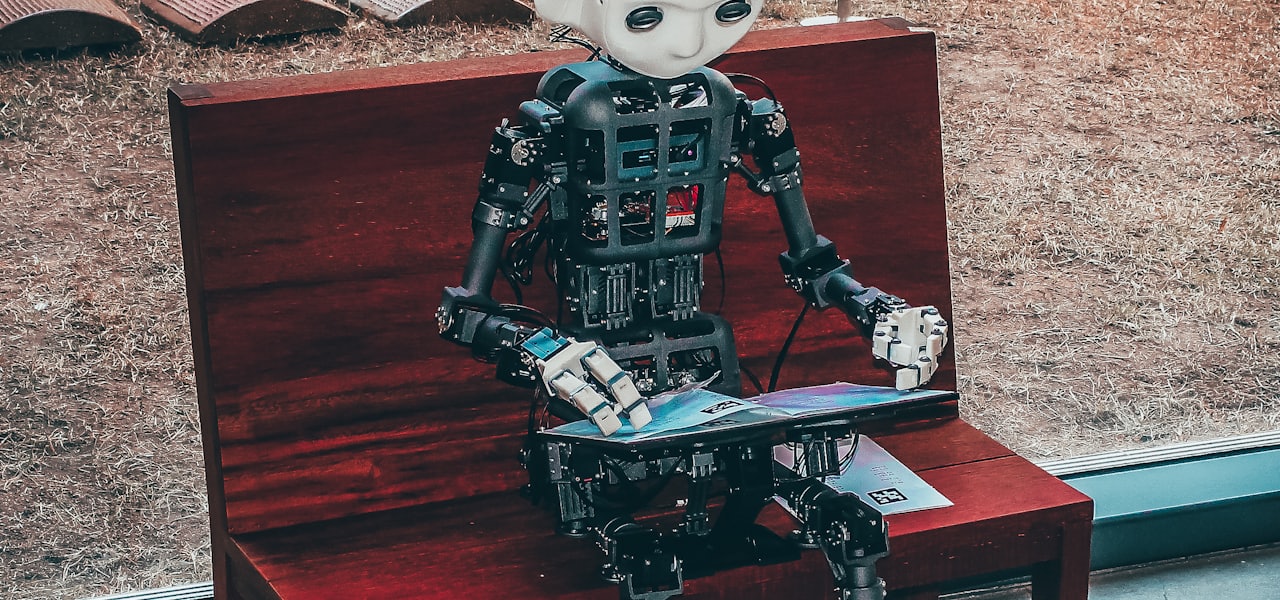
    Neurorobotics is the combined study of neuroscience, robotics, and artificial intelligence. It is the science and technology of embodied autonomous neural systems. Neural systems include brain-inspired algorithms (e.g. connectionist networks), computational models of biological neural networks (e.g. artificial spiking neural networks, large-scale simulations of neural microcircuits) and actual biological systems (e.g. in vivo and in vitro neural nets). Such neural systems can be embodied in machines with mechanic or any other forms of physical actuation. This includes robots, prosthetic or wearable systems but also, at smaller scale, micro-machines and, at the larger scales, furniture and infrastructures. Neurorobotics is that branch of neuroscience with robotics, which deals with the study and application of science and technology of embodied autonomous neural systems like brain-inspired algorithms. It is based on the idea that the brain is embodied and the body is embedded in the environment. Therefore, most neurorobots are required to function in the real world, as opposed to a simulated environment. Beyond brain-inspired algorithms for robots neurorobotics may also involve the design of brain-controlled robot systems. == Major classes of models == Neurorobots can be divided into various major classes based on the robot's purpose. Each class is designed to implement a specific mechanism of interest for study. Common types of neurorobots are those used to study motor control, memory, action selection, and perception. === Locomotion and motor control === Neurorobots are often used to study motor feedback and control systems, and have proved their merit in developing controllers for robots. Locomotion is modeled by a number of neurologically inspired theories on the action of motor systems. Locomotion control has been mimicked using models or central pattern generators, clumps of neurons capable of driving repetitive behavior, to make four-legged walking robots. Other groups have expanded the idea of combining rudimentary control systems into a hierarchical set of simple autonomous systems. These systems can formulate complex movements from a combination of these rudimentary subsets. This theory of motor action is based on the organization of cortical columns, which progressively integrate from simple sensory input into a complex afferent signals, or from complex motor programs to simple controls for each muscle fiber in efferent signals, forming a similar hierarchical structure. Another method for motor control uses learned error correction and predictive controls to form a sort of simulated muscle memory. In this model, awkward, random, and error-prone movements are corrected for using error feedback to produce smooth and accurate movements over time. The controller learns to create the correct control signal by predicting the error. Using these ideas, robots have been designed which can learn to produce adaptive arm movements or to avoid obstacles in a course. === Learning and memory systems === Robots designed to test theories of animal memory systems. Many studies examine the memory system of rats, particularly the rat hippocampus, dealing with place cells, which fire for a specific location that has been learned. Systems modeled after the rat hippocampus are generally able to learn mental maps of the environment, including recognizing landmarks and associating behaviors with them, allowing them to predict the upcoming obstacles and landmarks. Another study has produced a robot based on the proposed learning paradigm of barn owls for orientation and localization based on primarily auditory, but also visual stimuli. The hypothesized method involves synaptic plasticity and neuromodulation, a mostly chemical effect in which reward neurotransmitters such as dopamine or serotonin affect the firing sensitivity of a neuron to be sharper. The robot used in the study adequately matched the behavior of barn owls. Furthermore, the close interaction between motor output and auditory feedback proved to be vital in the learning process, supporting active sensing theories that are involved in many of the learning models. Neurorobots in these studies are presented with simple mazes or patterns to learn. Some of the problems presented to the neurorobot include recognition of symbols, colors, or other patterns and execute simple actions based on the pattern. In the case of the barn owl simulation, the robot had to determine its location and direction to navigate in its environment. === Action selection and value systems === Action selection studies deal with negative or positive weighting to an action and its outcome. Neurorobots can and have been used to study simple ethical interactions, such as the classical thought experiment where there are more people than a life raft can hold, and someone must leave the boat to save the rest. However, more neurorobots used in the study of action selection contend with much simpler persuasions such as self-preservation or perpetuation of the population of robots in the study. These neurorobots are modeled after the neuromodulation of synapses to encourage circuits with positive results. In biological systems, neurotransmitters such as dopamine or acetylcholine positively reinforce neural signals that are beneficial. One study of such interaction involved the robot Darwin VII, which used visual, auditory, and a simulated taste input to "eat" conductive metal blocks. The arbitrarily chosen good blocks had a striped pattern on them while the bad blocks had a circular shape on them. The taste sense was simulated by conductivity of the blocks. The robot had positive and negative feedbacks to the taste based on its level of conductivity. The researchers observed the robot to see how it learned its action selection behaviors based on the inputs it had. Other studies have used herds of small robots which feed on batteries strewn about the room, and communicate its findings to other robots. === Sensory perception === Neurorobots have also been used to study sensory perception, particularly vision. These are primarily systems that result from embedding neural models of sensory pathways in automatas. This approach gives exposure to the sensory signals that occur during behavior and also enables a more realistic assessment of the degree of robustness of the neural model. It is well known that changes in the sensory signals produced by motor activity provide useful perceptual cues that are used extensively by organisms. For example, researchers have used the depth information that emerges during replication of human head and eye movements to establish robust representations of the visual scene. == Biological robots == Biological robots are not officially neurorobots in that they are not neurologically inspired AI systems, but actual neuron tissue wired to a robot. This employs the use of cultured neural networks to study brain development or neural interactions. These typically consist of a neural culture raised on a multielectrode array (MEA), which is capable of both recording the neural activity and stimulating the tissue. In some cases, the MEA is connected to a computer which presents a simulated environment to the brain tissue and translates brain activity into actions in the simulation, as well as providing sensory feedback The ability to record neural activity gives researchers a window into a brain, which they can use to learn about a number of the same issues neurorobots are used for. An area of concern with the biological robots is ethics. Many questions are raised about how to treat such experiments. The central question concerns consciousness and whether or not the rat brain experiences it. There are many theories about how to define consciousness. == Implications for neuroscience == Neuroscientists benefit from neurorobotics because it provides a blank slate to test various possible methods of brain function in a controlled and testable environment. While robots are more simplified versions of the systems they emulate, they are more specific, allowing more direct testing of the issue at hand. They also have the benefit of being accessible at all times, while it is more difficult to monitor large portions of a brain while the human or animal is active, especially individual neurons. The development of neuroscience has produced neural treatments. These include pharmaceuticals and neural rehabilitation. Progress is dependent on an intricate understanding of the brain and how exactly it functions. It is difficult to study the brain, especially in humans, due to the danger associated with cranial surgeries. Neurorobots can improved the range of tests and experiments that can be performed in the study of neural processes.

    Read more →
  • Law and Corpus Linguistics

    Law and Corpus Linguistics

    Law and corpus linguistics (LCL) is an academic sub-discipline that uses large databases of examples of language usage equipped with tools designed by linguists called corpora to better get at the meaning of words and phrases in legal texts (statutes, constitutions, contracts, etc.). Thus, LCL is the application of corpus linguistic tools, theories, and methodologies to issues of legal interpretation in much the same way law and economics is the application of economic tools, theories, and methodologies to various legal issues. == History == A 2005 law review article by Lawrence Solan noted in passing that corpus linguistics had potential for its application to interpreting legal texts. But the first systematic exploration and advocacy of applying the tools and methodologies of corpus linguistics to legal interpretive questions of law and corpus linguistics came in the fall of 2010, when the BYU Law Review published a note by Stephen Mouritsen, entitled The Dictionary is Not a Fortress: Definitional Fallacies and a Corpus-Based Approach to Plain Meaning. The note argued that dictionaries are the primary linguistic tool used by judges to determine the plain or ordinary meaning of words and phrases, and highlighted the deficiencies of such an approach. In its stead, the note proposed using corpus linguistics. And the note would be later cited by Adam Liptak in a New York Times article on statutory construction. Law and corpus linguistics (LCL) gained greater legitimacy in July 2011 with the first judicial opinion in American history utilizing corpus linguistics to determine the meaning of a legal text: In re the Adoption of Baby E.Z. In a concurrence in part and in the judgment, Justice Thomas Lee wrote to put forth an alternative ground for the majority's holding—interpreting the phrase "custody determination" by using corpus linguistics. Justice Lee looked at 500 randomized sample sentences from the Corpus of Contemporary American English (COCA) and found that the most common sense of "custody" was in the context of divorce rather than adoption. Further, he found that "custody" is ten times more likely to co-occur (or collocate) with "divorce" than with "adoption". From that evidence Justice Lee concluded that he "would find that the custody proceedings covered by the Act are limited to proceedings resulting in the modifiable custody orders of a divorce", rather than the broader range of custody proceedings. Other jurisprudence and scholarship would follow. In a 2015 concurrence in State v. Rasabout, Justice Lee used a COCA search to determine that "discharge" when used with a firearm (or one of its synonyms) overwhelmingly referred to a single shot rather than emptying the entire magazine of the weapon. And in 2016, four of the five justices joined a footnote in a majority opinion by Justice Lee commending a party for using corpus linguistics in its briefing even though the Court found it unnecessary to resolve the related question. Finally, in 2016 the Michigan Supreme Court became the first court to use a linguist-designed corpus in a majority opinion (COCA), with both the majority and the dissent turning to COCA to determine the meaning of the word "information". In 2020, courts desiring to bolster the legal theory of original intent have sought the opportunity to undertake analyses of statutes utilizing corpus linguistics. In a Ninth Circuit Court of Appeals case, Jones v. Becerra (No. 20-56174), a case involving the Second Amendment and the constitutionality of a California statute which bans the sale of firearms to individuals under the age of 21, a Ninth Circuit panel requested that the parties address three questions: 1) “What is the original public meaning of the Second Amendment phrases: ‘A well regulated Militia’; ‘the right of the people’; and ‘shall not be infringed’? 2) How does the tool of corpus linguistics help inform the determination of the original public meaning of those Second Amendment phrases?” 3) How do the data yielded from corpus linguistics assist in the interpretation of the constitutionality of age-based restrictions under the Second Amendment? As to scholarship, in 2012, Mouritsen followed up his original work with an article in the Columbia Science and Technology Law Review, where he further refined and promoted the use of corpus-based methods for determining questions of legal ambiguity. Additionally, in 2016 two essays and an article on law and corpus linguistics were published. The Yale Law Journal Forum published Corpus Linguistics & Original Public Meaning: A New Tool to Make Originalism More Empirical. Written by Justice Lee and two co-authors, the essay urged originalists to turn to corpus linguistics to improve the rigor and accuracy of originalist scholarship. And in response, the Forum published an essay by Lawrence Solan (a Brooklyn Law professor with a PhD in linguistics), Can Corpus Linguistics Help Make Originalism Scientific? The Boston University Public Interest Law Journal published The Merciful Corpus: The Rule of Lenity, Ambiguity and Corpus Linguistics by Daniel Ortner. In the article Ortner applied corpus linguistics to determining whether sufficient ambiguity exists to trigger the rule of lenity in five Supreme Court cases. Looking forward, in 2017 two more articles are slated for publication. Lee Strang focuses on corpus linguistics and originalism in the U.C. Davis Law Review, and Lawrence Solan and Tammy Gales explore corpus linguistics in the context of finding ordinary meaning in statutory interpretation in the International Journal of Legal Discourse. Lawyers and journalists have also taken notice of corpus linguistics at it relates to the law. In 2010, Neal Goldfarb filed the first known brief in the Supreme Court using corpus linguistics (COCA) to determine whether the ordinary meaning of "personal" referred to corporations in the case FCC v. AT&T. The amicus brief looked at the top collocates (words that co-occur) of "personal" in COHA as well as BYU's Time Magazine Corpus. And writing for The Atlantic, Ben Zimmer took note of this new trend, referring to corpus linguistics in the courts as "Like Lexis on Steroids". On the academic front, in 2013 BYU Law School started the first class on law and corpus linguistics, co-taught by Mouritsen, Lee, and (now Dean) Gordon Smith. The class is currently in its fourth year. And in February 2016, BYU Law School hosted the inaugural conference on LCL, with over two dozen legal and linguistic scholars from around the country discussing and debating the next steps forward for the growing academic movement. The conference has been held regularly in subsequent years. At the 2016 conference BYU Law School announced its plans and progress on the Corpus of Founding Era American English (COFEA), a corpus that covers 1760–1799 and contains more than 120 million words have been collected from founding era letters, diaries, newspapers, non-fiction books, fiction, sermons, speeches, debates, legal cases, and other legal materials.

    Read more →
  • Factored language model

    Factored language model

    The factored language model (FLM) is an extension of a conventional language model introduced by Jeff Bilmes and Katrin Kirchoff in 2003. In an FLM, each word is viewed as a vector of k factors: w i = { f i 1 , . . . , f i k } . {\displaystyle w_{i}=\{f_{i}^{1},...,f_{i}^{k}\}.} An FLM provides the probabilistic model P ( f | f 1 , . . . , f N ) {\displaystyle P(f|f_{1},...,f_{N})} where the prediction of a factor f {\displaystyle f} is based on N {\displaystyle N} parents { f 1 , . . . , f N } {\displaystyle \{f_{1},...,f_{N}\}} . For example, if w {\displaystyle w} represents a word token and t {\displaystyle t} represents a Part of speech tag for English, the expression P ( w i | w i − 2 , w i − 1 , t i − 1 ) {\displaystyle P(w_{i}|w_{i-2},w_{i-1},t_{i-1})} gives a model for predicting current word token based on a traditional Ngram model as well as the Part of speech tag of the previous word. A major advantage of factored language models is that they allow users to specify linguistic knowledge such as the relationship between word tokens and Part of speech in English, or morphological information (stems, root, etc.) in Arabic. Like N-gram models, smoothing techniques are necessary in parameter estimation. In particular, generalized back-off is used in training an FLM.

    Read more →
  • Philipp Koehn

    Philipp Koehn

    Philipp Koehn (born 1 August 1971 in Erlangen, West Germany) is a computer scientist and researcher in the field of machine translation. His primary research interest is statistical machine translation and he is one of the inventors of a method called phrase based machine translation. This is a sub-field of statistical translation methods that employs sequences of words (or so-called "phrases") as the basis of translation, expanding the previous word based approaches. A 2003 paper which he authored with Franz Josef Och and Daniel Marcu called Statistical phrase-based translation has attracted wide attention in Machine translation community and has been cited over a thousand times. Phrase based methods are widely used in machine translation applications in industry. Philipp Koehn received his PhD in computer science in 2003 from the University of Southern California, where he worked at the Information Sciences Institute advised by Kevin Knight. After a year as a postdoctoral fellow under Michael Collins at the Massachusetts Institute of Technology, he joined the University of Edinburgh as a lecturer in the School of Informatics in 2005. He was appointed reader in 2010 and professor in 2012. In 2014, he was appointed professor at the computer science department of The Johns Hopkins University, where he is affiliated with the Center for Language and Speech Processing. == Moses statistical machine translation decoder == The Moses machine translation decoder is an open source project that was created by and is maintained under the guidance of Philipp Koehn. The Moses decoder is a platform for developing Statistical machine translation systems given a parallel corpus for any language pair. The decoder was mainly developed by Hieu Hoang and Philipp Koehn at the University of Edinburgh and extended during a Johns Hopkins University Summer Workshop and further developed under Euromatrix and GALE project funding. The decoder (which is part of a complete statistical machine translation toolkit) is the de facto benchmark for research in the field. Although Koehn continues to play a major role in the development of Moses, the Moses decoder was supported by the European Framework 6 projects Euromatrix, TC-Star, the European Framework 7 projects EuroMatrixPlus, Let's MT, META-NET and MosesCore and the DARPA GALE project, as well as several universities such as the University of Edinburgh, the University of Maryland, ITC-irst, Massachusetts Institute of Technology, and others. Substantial additional contributors to the Moses decoder include Hieu Hoang, Chris Dyer, Josh Schroeder, Marcello Federico, Richard Zens, and Wade Shen. == Europarl corpus == The Europarl corpus is a set of documents that consists of the proceedings of the European Parliament from 1996 to the present. The corpus has been compiled and expanded by a group of researchers led by Philipp Koehn at University of Edinburgh. The data that makes up the corpus was extracted from the website of the European Parliament and then prepared for linguistic research. The latest release (2012) comprised up to 60 million words per language, with 21 European languages represented: Romanic (French, Italian, Spanish, Portuguese, Romanian), Germanic (English, Dutch, German, Danish, Swedish), Slavic (Bulgarian, Czech, Polish, Slovak, Slovene), Finno-Ugric (Finnish, Hungarian, Estonian), Baltic (Latvian, Lithuanian), and Greek. == Other interests and activities in chronological order == Koehn is a professor at Johns Hopkins University where he continues his research into machine translation through his affiliation with the Center for Language and Speech Processing Koehn is a professor and chair of machine translation at the University of Edinburgh School of Informatics and contributes to its statistical machine translation group which organises workshops, seminars and project related to the subject. Koehn has consulted to SYSTRAN periodically between 2006 and 2011. SYSTRAN was acquired by CLSI, a Korean machine translation company in April 2014. Koehn worked for Facebook/META AI Research from 2018 to 2022. Koehn is also chief scientist for Omniscien Technologies and a shareholder in Omniscien Technologies since 2007. Omniscien Technologies is a private company developing and commercialising machine translation technologies. Koehn authored a book titled "Statistical Machine Translation" in 2009 and a book titled "Neural Machine Translation" in 2020. == Awards and recognition == 2013: One of three finalists in the category of Research for the European Patent Office (EPO) 2013 European Inventor Award. Koehn was recognised for patent EP 1488338 B, Phrase-Based Joint Probability Model for Statistical Machine Translations, a translation model that uses mathematical probabilities to determine the most likely interpretation of chunks of text between foreign languages. 2015: Koehn received the Award of Honor of the International Association for Machine Translation. 2024: Koehn was named Fellow of the Association for Computational Linguistics (ACL).

    Read more →
  • Machine learning

    Machine learning

    Machine learning (ML) is a field of study in artificial intelligence concerned with the development and study of statistical algorithms that can learn from data and generalize to unseen data, and thus perform tasks without being explicitly programmed. Advances in the field of deep learning have allowed neural networks, a class of statistical algorithms, to surpass many previous machine learning approaches in performance. Statistics and mathematical optimisation methods compose the foundations of machine learning. Data mining is a related field of study, focusing on exploratory data analysis (EDA) through unsupervised learning. From a theoretical viewpoint, probably approximately correct learning provides a mathematical and statistical framework for describing machine learning. Most traditional machine learning and deep learning algorithms can be described as empirical risk minimisation under this framework. == History == The term machine learning was coined in 1959 by Arthur Samuel, an IBM employee and pioneer in the field of computer gaming and artificial intelligence. The synonym self-teaching computers was also used during this time period. The earliest machine learning program was introduced in the 1950s, when Samuel invented a computer program that calculated the chance of winning in checkers for each side, but the history of machine learning is rooted in decades of efforts to study human cognitive processes. In 1949, Canadian psychologist Donald Hebb published the book The Organization of Behavior, in which he introduced a theoretical neural structure formed by certain interactions among nerve cells. The Hebbian theory of neuron interaction set the groundwork for how many machine learning algorithms work, with connected artificial neurons changing the strength of their connections based on data. Other researchers who have studied human cognitive systems contributed to the modern machine learning technologies as well, including Walter Pitts and Warren McCulloch, who proposed the first mathematical model of neural networks including algorithms that mirror human thought processes. By the early 1960s, an experimental "learning machine" with punched tape memory, called Cybertron, had been developed by Raytheon Company to analyse sonar signals, electrocardiograms, and speech patterns using rudimentary reinforcement learning. It was repetitively "trained" by a human operator/teacher to recognise patterns and equipped with a "goof" button to cause it to reevaluate incorrect decisions. A representative book on research into machine learning during the 1960s was Nils Nilsson's book "Learning Machines", dealing mostly with machine learning for pattern classification. Interest related to pattern recognition continued into the 1970s, as described by Duda and Hart in 1973. In 1981, a report was given on using teaching strategies so that an artificial neural network learns to recognise 40 characters (26 letters, 10 digits, and 4 special symbols) from a computer terminal. Tom M. Mitchell provided a widely quoted, more formal definition of the algorithms studied in the machine learning field: "A computer program is said to learn from experience E with respect to some class of tasks T and performance measure P if its performance at tasks in T, as measured by P, improves with experience E." This definition of the tasks in which machine learning is concerned is fundamentally operational rather than defining the field in cognitive terms. This follows Alan Turing's proposal in his paper "Computing Machinery and Intelligence", in which the question, "Can machines think?", is replaced by asking whether machines can convincingly imitate a human in its responses to human-posed questions. In 2014 Ian Goodfellow and others introduced generative adversarial networks (GANs) which could produce realistic synthetic data. By 2016 AlphaGo had won against top human players in Go using reinforcement learning techniques. == Relationships to other fields == === Artificial intelligence === As a scientific endeavour, machine learning grew out of the quest for artificial intelligence (AI). In the early days of AI as an academic discipline, some researchers were interested in having machines learn from data. They attempted to approach the problem with various symbolic methods, as well as what were then termed "neural networks"; these were mostly perceptrons and other models that were later found to be reinventions of the generalised linear models of statistics. Probabilistic reasoning was also employed, especially in automated medical diagnosis. However, an increasing emphasis on the logical, knowledge-based approach caused a rift between AI and machine learning. Probabilistic systems were plagued by theoretical and practical problems of data acquisition and representation. By 1980, expert systems had come to dominate AI, and statistics was out of favour. Work on symbolic/knowledge-based learning continued within AI, leading to inductive logic programming (ILP), but the more statistical line of research was now outside the field of AI proper, in pattern recognition and information retrieval. Neural network research was abandoned by AI and computer science around the same time. This subfield, termed "connectionism", was continued by researchers from other disciplines, including John Hopfield, David Rumelhart, and Geoffrey Hinton. Their main success came in the mid-1980s with the reinvention of backpropagation. Machine learning (ML), reorganised and recognised as its own field, started to flourish in the 1990s. The field changed its goal from achieving artificial intelligence to tackling solvable problems of a practical nature. It shifted focus away from the symbolic approaches it had inherited from AI, and toward methods and models borrowed from statistics, fuzzy logic, and probability theory. === Data compression === === Data mining === Machine learning and data mining often employ the same methods and overlap significantly, but while machine learning focuses on prediction based on known properties learned from the training data, data mining focuses on the discovery of previously unknown properties in the data (this is the analysis step of knowledge discovery in databases). Data mining uses many machine learning methods, but with different goals; on the other hand, machine learning also employs data mining methods as "unsupervised learning" or as a preprocessing step to improve learner accuracy. Much of the confusion between these two research communities comes from the basic assumptions they work with: in machine learning, performance is usually evaluated with respect to the ability to reproduce known knowledge, while in knowledge discovery and data mining (KDD) the key task is the discovery of previously unknown knowledge. Evaluated with respect to known knowledge, an uninformed (unsupervised) method will easily be outperformed by other supervised methods, while in a typical KDD task, supervised methods cannot be used due to the unavailability of training data. Machine learning also has intimate ties to optimization: Many learning problems are formulated as minimisation of some loss function on a training set of examples. Loss functions express the discrepancy between the predictions of the model being trained and the actual problem instances (for example, in classification, one wants to assign a label to instances, and models are trained to correctly predict the preassigned labels of a set of examples). === Generalization === Characterizing the generalisation of various learning algorithms is an active topic of current research, especially for deep learning algorithms. === Statistics === Machine learning and statistics are closely related fields in terms of methods, but distinct in their principal goal: statistics draws population inferences from a sample, while machine learning finds generalisable predictive patterns. Conventional statistical analyses require the a priori selection of a model most suitable for the study data set. In addition, only significant or theoretically relevant variables based on previous experience are included for analysis. In contrast, machine learning is not built on a pre-structured model; rather, the data shape the model by detecting underlying patterns. The more variables (input) used to train the model, the more accurate the ultimate model will be. Leo Breiman distinguished two statistical modelling paradigms: the data model and the algorithmic model, wherein "algorithmic model" means more or less the machine learning algorithms like Random forest. Some statisticians have adopted methods from machine learning, producing the field of statistical learning. === Statistical physics === Analytical and computational techniques derived from deep-rooted physics of disordered systems can be extended to large-scale problems, including machine learning, e.g., to analyse the weight space of deep neural networks. Statistical physics is thus

    Read more →
  • Jian Ma (computational biologist)

    Jian Ma (computational biologist)

    Jian Ma (Chinese: 马坚) is an American computer scientist and computational biologist. He is the Ray and Stephanie Lane Professor of Computational Biology in the School of Computer Science at Carnegie Mellon University. He is a faculty member in the Ray and Stephanie Lane Computational Biology Department. His lab develops AI/ML methods to study the structure and function of the human genome and cellular organization and their implications for health and disease. During his Ph.D. and postdoc training, he developed algorithms to reconstruct the ancestral mammalian genome and evolutionary history. His research group has recently pioneered a series of new machine learning solutions for 3D genome organization, single-cell epigenomics, spatial omics, and complex molecular interactions. His lab also explores large language models to uncover gene regulatory mechanisms and the intricate connections among cellular components, with the aim of driving discovery and guiding experimentation. He received an NSF CAREER award in 2011. In 2020, he was awarded a Guggenheim Fellowship in Computer Science. He received the Allen Newell Award for Research Excellence (2025). He is an elected Fellow of the American Association for the Advancement of Science, the American Institute for Medical and Biological Engineering, the International Society for Computational Biology, and the Association for Computing Machinery. He leads an NIH 4D Nucleome Center to develop machine learning algorithms to better understand the cell nucleus. He served as the Program Chair for RECOMB 2024. He is also a member of the Scientific Advisory Board of the Chan Zuckerberg Biohub Chicago (CZ Biohub Chicago) and the RECOMB Steering Committee. In 2024, he launched the Center for AI-Driven Biomedical Research (AI4BIO) at CMU, which will be a catalyst for innovations at the intersection of AI and biomedicine across the School of Computer Science and campus. == Selected Recent Publications == Chen V#, Yang M#, Cui W, Kim JS, Talwalkar A, and Ma J. Applying interpretable machine learning in computational biology - pitfalls, recommendations and opportunities for new developments. Nature Methods, 21(8):1454-1461, 2024. Xiong K#, Zhang R#, and Ma J. scGHOST: Identifying single-cell 3D genome subcompartments. Nature Methods, 21(5):814-822, 2024. Zhou T, Zhang R, Jia D, Doty RT, Munday AD, Gao D, Xin L, Abkowitz JL, Duan Z, and Ma J. GAGE-seq concurrently profiles multiscale 3D genome organization and gene expression in single cells. Nature Genetics, 56(8):1701-1711, 2024. Zhang Y, Boninsegna L, Yang M, Misteli T, Alber F, and Ma J. Computational methods for analysing multiscale 3D genome organization. Nature Reviews Genetics, 5(2):123-141, 2024. Chidester B#, Zhou T#, Alam S, and Ma J. SPICEMIX enables integrative single-cell spatial modeling of cell identity. Nature Genetics, 55(1):78-88, 2023. [Cover Article] Zhang R#, Zhou T#, and Ma J. Ultrafast and interpretable single-cell 3D genome analysis with Fast-Higashi. Cell Systems, 13(10):P798-807.E6, 2022. [Cover Article] Zhu X#, Zhang Y#, Wang Y, Tian D, Belmont AS, Swedlow JR, and Ma J. Nucleome Browser: An integrative and multimodal data navigation platform for 4D Nucleome. Nature Methods, 19(8):911-913, 2022. Zhang R, Zhou T, and Ma J. Multiscale and integrative single-cell Hi-C analysis with Higashi. Nature Biotechnology, 40:254–261, 2022.

    Read more →
  • Cognitive Technologies

    Cognitive Technologies

    Cognitive Technologies is a Russian software corporation that develops corporate business applications, AI-based advanced driver assistance systems. Founded in 1993 in Moscow (Russia), the company has offices in Eastern Europe, with R&D Centers in Russia. == History == Cognitive Technologies was founded in 1993 by Olga Uskova and Vladimir Arlazarov. The first employees previously worked in the team that developed the first world computer chess champion "Kaissa". The first programs developed by Cognitive Technologies were optical image and character recognition software – Tiger and CuneiForm. In February 2015 Cognitive Technologies and Kamaz, Russian Dakar Rally-winning truck manufacturer, started working on the self-driving Kamaz truck project. The first field tests took place in June 2015. In 2015 Andrey Chernogorov was appointed CEO of the company. == Products == Cognitive Technologies develops business application software and self-driving vehicle artificial intelligence. The main products are: C-pilot, AI-based ADAS E1 Evfrat – electronic workflow system CognitiveLot – e-purchasing systems == Cooperation with global companies == Under the contract signed between Cognitive Technologies and Hewlett-Packard, all scanners sold in Russia had text recognition software developed by Cognitive Technologies. It was the first contract with HP for an Eastern European company. Afterwards, Cognitive Technologies signed OEM contracts and business agreements with several global IT-companies, including IBM, Canon, Corel, Samsung, Xerox, Brother, Epson, and Olivetti. In 1998 Cognitive Technologies became the first company in Eastern Europe to get the Oracle Complementary Software Provider status. In 2001 Cognitive Technologies sold its Russian language speech corpus to Intel. In 2010 Cognitive Technologies sold its text parsing module to Yandex. The company also signed an agreement with NVIDIA join efforts in the development of intelligent document recognition technologies. == Self-driving car project == The system developed by Cognitive Technologies does not require building smart cities and smart roads equipped with multiple sensors – it works the opposite way, trying to understand the situation on the road like humans do. The system uses a video camera like a driver who uses his eyes, analyzing the information and focusing on the relevant data. For this purpose the system uses a special type of computer vision – foveal computer vision. Only 5–7% of the data gathered by the video cameras and sensors is processed by the system as relevant. The prototype is being tested in Russia on rough roads, on roads without marking, with the goal to prepare the system for work in difficult situations and on bad roads all around the world. == C-Pilot ADAS project == In August 2016 Cognitive Technologies started its own ADAS development project C-Pilot for ground transport control automation. == Self-driving tractors and harvesters project == The experts from Cognitive Technologies claim that the system will track stones, poles, and other obstacles that might be dangerous for the vehicles. This data will enable the engineers to develop an interactive field map, with GPS coordinates for stones and other obstacles. Eventually, this will result in an alteration of the harvester's movement pattern preventing it from running into stones or other objects that may inflict damage. Harvesters will work autonomously on the field, on the territory that is narrowed by radio beacons. == Present international activities == In 2016 Cognitive Technologies has joined the international community OpenPower Foundation, a consortium of open source solutions to developers based on POWER technology from IBM, which includes the world's leading IT map of Google, NVidia, Mellanox, etc. Within the consortium Cognitive Technologies is the initiator of forming of an international working group to develop a single software standard for the self-driving vehicle control. == Awards == In 2016, the leading Russian business newspaper Kommersant, announced that Cognitive Technologies is the TOP-2 Russian software company. TOP-6 Russian software company in 2015 according to Russoft TOP-500 biggest Russian companies according to RBC TOP-2 company of the Russian EDMS market in 2014 according to IDC TOP-20 Russian biggest IT-companies in 2013 according to Cnews Analytics

    Read more →
  • Hanna Hajishirzi

    Hanna Hajishirzi

    Hannaneh Hajishirzi is an Iranian-American computer scientist specializing in natural language processing. She is Torode Family Professor in Computer Science & Engineering in the Paul G. Allen School of Computer Science and Engineering at the University of Washington, head of the H2Lab in the Allen School, and a senior director of natural language processing in the Allen Institute for AI. == Education and career == After a bachelor's degree from the Sharif University of Technology, Hajishirzi completed her Ph.D. in computer science in 2011, at the University of Illinois Urbana-Champaign. Her dissertation, Action-Centered Reasoning for Probabilistic Dynamic Systems, was supervised by Eyal Amir. After postdoctoral research at Disney Research in Pittsburgh, Hajishirzi joined the University of Washington in 2012, as a research scientist in electrical engineering. In 2015 she became a research assistant professor in electrical engineering. She obtained a regular-rank assistant professorship in 2018, at the same time becoming an AI Fellow in the Allen Institute for AI, where she became a senior director of research in 2021. She was promoted to associate professor in 2022 and to full professor in 2025. == Recognition == Hajishirzi was named as a Fellow of the Association for Computational Linguistics in 2025, "for significant contributions to question answering, scientific applications, multimodal artificial intelligence, and fully open language models". == Personal life == Hajishirzi is married to Ali Farhadi, the CEO of the Allen Institute for AI.

    Read more →
  • Outline of the Python programming language

    Outline of the Python programming language

    The following outline is provided as an overview of and topical guide to Python: Python is a general-purpose, interpreted, object-oriented, functional, multi-paradigm, and dynamically typed programming language known for its emphasis on code readability and broad standard library. Python was created by Guido van Rossum and first released in 1991. It emphasizes code readability and developer productivity. == What type of language is Python? == Programming language — artificial language designed to communicate instructions to a machine. Object-oriented programming — built primarily around objects and classes. Functional programming — supports functions as first-class objects. Scripting language — often used for automation and small programs. General-purpose programming language — designed for a wide variety of application domains. Dynamically typed — type checking occurs at runtime. Interpreted language — code is executed by an interpreter. Multi-paradigm — supports procedural, object-oriented, and functional programming. == History of Python == ABC (programming language) – precursor to Python Python was started by Guido van Rossum in 1989 and first released in 1991. Python 2 — major version released in 2000, officially retired in 2020. Python 3 — released in 2008 == General Python concepts == == Issues and limitations == Performance — generally slower than many compiled languages such as C or Java can be mitigated by C extensions or JIT compilers (PyPy). Global interpreter lock — limits parallel CPU-bound threads in CPython Memory consumption — high memory use compared to some lower-level languages Version compatibility — Python 2 vs Python 3 differences caused migration issues == Python implementations == CPython — reference implementation in C IronPython — Python for .NET Jython — Python for the JVM MicroPython — Python for microcontrollers and embedded systems Nuitka — compiler that packages user code with CPython into a static binary PyPy — JIT-compiled Python interpreter for speed PythonAnywhere — freemium hosted Python installation that runs in the browser Stackless Python — Python with lightweight concurrency features == Python toolchain == List of Python software Comparison of Python IDEs Comparison of server-side web frameworks for Python List of Python frameworks List of Python libraries List of unit testing frameworks for Python Python Package Index == Notable projects using Python == YouTube (backend) Instagram (backend) Dropbox Reddit OpenStack Blender (scripting and plugins) SageMath NumPy Pandas TensorFlow == Python development communities == ActiveState — commercial Python distributions and support Anaconda, Inc. — Python data science ecosystem GitHub Python Software Foundation Python Package Index (PyPI) — third-party software repository for Python == Example source code == Articles with example Python code == Python publications == === Books about Python === Automate the Boring Stuff with Python – Creative Commons Python book Alex Martelli — Python in a Nutshell and Python Cookbook Mark Pilgrim – Dive into Python Naomi Ceder — The Quick Python Book Wes McKinney — Python for Data Analysis Zed Shaw – Learn Python the Hard Way === Textbooks === Core Python Programming == Python programmers == == Python conferences == EuroPython – annual Python conference in Europe PyCon – the largest annual convention for the Python community PyData – conference series focused on data analysis, machine learning, and scientific computing with Python SciPy Conferences – focused on the use of Python in scientific computing and research DjangoCon – a conference dedicated to the Django web framework PyOhio – a free regional Python conference held in Ohio == Python learning resources == Codecademy – interactive Python programming lessons GeeksforGeeks – tutorials, coding examples, and interactive programming for Python concepts and data structures. Kaggle – free Python courses focused on data science and machine learning. Python.org Tutorial – the official Python tutorial from the Python Software Foundation. Real Python – articles, tutorials, and courses for Python developers. W3Schools – beginner-friendly Python tutorials. Wikibooks Python Programming – free open-content textbook on Python. === Competitive programming === Codeforces – an online platform for programming contests that supports Python submissions Codewars – gamified coding challenges supporting Python HackerRank – competitive programming and interview preparation site with Python challenges Kaggle – while focused on data science competitions, it also includes Python-based problem solving. LeetCode – online judge and problem-solving platform where Python is widely used

    Read more →
  • Universal Networking Language

    Universal Networking Language

    Universal Networking Language (UNL) is a declarative formal language specifically designed to represent semantic data extracted from natural language texts. It can be used as a pivot language in interlingual machine translation systems or as a knowledge representation language in information retrieval applications. == Structure == In UNL, the information conveyed by the natural language is represented sentence by sentence as a hypergraph composed of a set of directed binary labeled links between nodes or hypernodes. As an example, the English sentence "The sky was blue?!" can be represented in UNL as follows: In the example above, sky(icl>natural world) and blue(icl>color), which represent individual concepts, are UW's attributes of an object directed to linking the semantic relation between the two UWs; "@def", "@interrogative", "@past", "@exclamation" and "@entry" are attributes modifying UWs. UWs are expressed in natural language to be humanly readable. They consist of a "headword" (the UW root) and a "constraint list" (the UW suffix between parentheses), where the constraints are used to disambiguate the general concept conveyed by the headword. The set of UWs is organized in the UNL Ontology. Relations are intended to represent semantic links between words in every existing language. They can be ontological (such as "icl" and "iof"), logical (such as "and" and "or"), or thematic (such as "agt" = agent, "ins" = instrument, "tim" = time, "plc" = place, etc.). There are currently 46 relations in the UNL Specs that jointly define the UNL syntax. Within the UNL program, the process of representing natural language sentences in UNL graphs is called UNLization, and the process of generating natural language sentences out of UNL graphs is called NLization. UNLization is intended to be carried out semi-automatically (i.e., by humans with computer aids), and NLization is intended to be carried out automatically. == History == The UNL program started in 1996 as an initiative of the Institute of Advanced Studies (IAS) of the United Nations University (UNU) in Tokyo, Japan. In January 2001, the United Nations University set up an autonomous and non-profit organization, the UNDL Foundation, to be responsible for the development and management of the UNL program. It inherited from the UNU/IAS the mandate of implementing the UNL program. The overall architecture of the UNL System has been developed with a set of basic software and tools. It was recognized by the Patent Cooperation Treaty (PCT) for the "industrial applicability" of the UNL, which was obtained in May 2002 through the World Intellectual Property Organization (WIPO); the UNL acquired the US patents 6,704,700 and 7,107,206.

    Read more →
  • Iterative Viterbi decoding

    Iterative Viterbi decoding

    Iterative Viterbi decoding is an algorithm that spots the subsequence S of an observation O = {o1, ..., on} having the highest average probability (i.e., probability scaled by the length of S) of being generated by a given hidden Markov model M with m states. The algorithm uses a modified Viterbi algorithm as an internal step. The scaled probability measure was first proposed by John S. Bridle. An early algorithm to solve this problem, sliding window, was proposed by Jay G. Wilpon et al., 1989, with constant cost T = mn2/2. A faster algorithm consists of an iteration of calls to the Viterbi algorithm, reestimating a filler score until convergence. == The algorithm == A basic (non-optimized) version, finding the sequence s with the smallest normalized distance from some subsequence of t is: // input is placed in observation s[1..n], template t[1..m], // and [[distance matrix]] d[1..n,1..m] // remaining elements in matrices are solely for internal computations (int, int, int) AverageSubmatchDistance(char s[0..(n+1)], char t[0..(m+1)], int d[1..n,0..(m+1)]) { // score, subsequence start, subsequence end declare int e, B, E t'[0] := t'[m+1] := s'[0] := s'[n+1] := 'e' e := random() do e' := e for i := 1 to n do d'[i,0] := d'[i,m+1] := e (e, B, E) := ViterbiDistance(s', t', d') e := e/(E-B+1) until (e == e') return (e, B, E) } The ViterbiDistance() procedure returns the tuple (e, B, E), i.e., the Viterbi score "e" for the match of t and the selected entry (B) and exit (E) points from it. "B" and "E" have to be recorded using a simple modification to Viterbi. A modification that can be applied to CYK tables, proposed by Antoine Rozenknop, consists in subtracting e from all elements of the initial matrix d.

    Read more →
  • Unsupervised learning

    Unsupervised learning

    Unsupervised learning is a framework in machine learning where, in contrast to supervised learning, algorithms learn patterns exclusively from unlabeled data. Other frameworks in the spectrum of supervisions include weak- or semi-supervision, where a small portion of the data is tagged, and self-supervision. Some researchers consider self-supervised learning a form of unsupervised learning. Conceptually, unsupervised learning divides into the aspects of data, training, algorithm, and downstream applications. Typically, the dataset is harvested cheaply "in the wild", such as massive text corpus obtained by web crawling, with only minor filtering (such as Common Crawl). This compares favorably to supervised learning, where the dataset (such as the ImageNet1000) is typically constructed manually, which is much more expensive. There are algorithms designed specifically for unsupervised learning, such as clustering algorithms like k-means, dimensionality reduction techniques like principal component analysis (PCA), Boltzmann machine learning, and autoencoders. After the rise of deep learning, most large-scale unsupervised learning has been done by training general-purpose neural network architectures by gradient descent, adapted to performing unsupervised learning by designing an appropriate training procedure. Sometimes a trained model can be used as-is, but more often they are modified for downstream applications. For example, the generative pretraining method trains a model to generate a textual dataset, before finetuning it for other applications, such as text classification. As another example, autoencoders are trained to produce good features, which can then be used as a module for other models, such as in a latent diffusion model. == Tasks == Tasks are often categorized as discriminative (recognition) or generative (imagination). Often but not always, discriminative tasks use supervised methods and generative tasks use unsupervised (see Venn diagram); however, the separation is very hazy. For example, object recognition favors supervised learning but unsupervised learning can also cluster objects into groups. Furthermore, as progress marches onward, some tasks employ both methods, and some tasks swing from one to another. For example, image recognition started off as heavily supervised, but became hybrid by employing unsupervised pre-training, and then moved towards supervision again with the advent of dropout, ReLU, and adaptive learning rates. A typical generative task is as follows. At each step, a datapoint is sampled from the dataset, and part of the data is removed, and the model must infer the removed part. This is particularly clear for the denoising autoencoders and BERT. == Neural network architectures == === Training === During the learning phase, an unsupervised network tries to mimic the data it is given and uses the error in its mimicked output to correct itself (i.e. correct its weights and biases). Sometimes the error is expressed as a low probability that the erroneous output occurs, or it might be expressed as an unstable high energy state in the network. In contrast to supervised methods' dominant use of backpropagation, unsupervised learning also employs other methods including: Hopfield learning rule, Boltzmann learning rule, Contrastive Divergence, Wake Sleep, Variational Inference, Maximum Likelihood, Maximum A Posteriori, Gibbs Sampling, and backpropagating reconstruction errors or hidden state reparameterizations. See the table below for more details. === Energy === An energy function is a macroscopic measure of a network's activation state. In Boltzmann machines, it plays the role of the Cost function. This analogy with physics is inspired by Ludwig Boltzmann's analysis of a gas' macroscopic energy from the microscopic probabilities of particle motion p ∝ e − E / k T {\displaystyle p\propto e^{-E/kT}} , where k is the Boltzmann constant and T is temperature. In the RBM network the relation is p = e − E / Z {\displaystyle p=e^{-E}/Z} , where p {\displaystyle p} and E {\displaystyle E} vary over every possible activation pattern and Z = ∑ All Patterns e − E ( pattern ) {\displaystyle \textstyle {Z=\sum _{\scriptscriptstyle {\text{All Patterns}}}e^{-E({\text{pattern}})}}} . To be more precise, p ( a ) = e − E ( a ) / Z {\displaystyle p(a)=e^{-E(a)}/Z} , where a {\displaystyle a} is an activation pattern of all neurons (visible and hidden). Hence, some early neural networks bear the name Boltzmann Machine. Paul Smolensky calls − E {\displaystyle -E\,} the Harmony. A network seeks low energy which is high Harmony. === Networks === This table shows connection diagrams of various unsupervised networks, the details of which will be given in the section Comparison of Networks. Circles are neurons and edges between them are connection weights. As network design changes, features are added on to enable new capabilities or removed to make learning faster. For instance, neurons change between deterministic (Hopfield) and stochastic (Boltzmann) to allow robust output, weights are removed within a layer (RBM) to hasten learning, or connections are allowed to become asymmetric (Helmholtz). Of the networks bearing people's names, only Hopfield worked directly with neural networks. Boltzmann and Helmholtz came before artificial neural networks, but their work in physics and physiology inspired the analytical methods that were used. === History === === Specific Networks === Here, we highlight some characteristics of select networks. The details of each are given in the comparison table below. Hopfield Network Ferromagnetism inspired Hopfield networks. A neuron corresponds to an iron domain with binary magnetic moments Up and Down, and neural connections correspond to the domain's influence on each other. Symmetric connections enable a global energy formulation. During inference the network updates each state using the standard activation step function. Symmetric weights and the right energy functions guarantees convergence to a stable activation pattern. Asymmetric weights are difficult to analyze. Hopfield nets are used as Content Addressable Memories (CAM). Boltzmann Machine These are stochastic Hopfield nets. Their state value is sampled from this pdf as follows: suppose a binary neuron fires with the Bernoulli probability p(1) = 1/3 and rests with p(0) = 2/3. One samples from it by taking a uniformly distributed random number y, and plugging it into the inverted cumulative distribution function, which in this case is the step function thresholded at 2/3. The inverse function = { 0 if x <= 2/3, 1 if x > 2/3 }. Sigmoid Belief Net Introduced by Radford Neal in 1992, this network applies ideas from probabilistic graphical models to neural networks. A key difference is that nodes in graphical models have pre-assigned meanings, whereas Belief Net neurons' features are determined after training. The network is a sparsely connected directed acyclic graph composed of binary stochastic neurons. The learning rule comes from Maximum Likelihood on p(X): Δwij ∝ {\displaystyle \propto } sj (si - pi), where pi = 1 / ( 1 + eweighted inputs into neuron i ). sj's are activations from an unbiased sample of the posterior distribution and this is problematic due to the Explaining Away problem raised by Judea Perl. Variational Bayesian methods uses a surrogate posterior and blatantly disregard this complexity. Deep Belief Network Introduced by Hinton, this network is a hybrid of RBM and Sigmoid Belief Network. The top 2 layers is an RBM and the second layer downwards form a sigmoid belief network. One trains it by the stacked RBM method and then throw away the recognition weights below the top RBM. As of 2009, 3-4 layers seems to be the optimal depth. Helmholtz machine These are early inspirations for the Variational Auto Encoders. Its 2 networks combined into one—forward weights operates recognition and backward weights implements imagination. It is perhaps the first network to do both. Helmholtz did not work in machine learning but he inspired the view of "statistical inference engine whose function is to infer probable causes of sensory input". the stochastic binary neuron outputs a probability that its state is 0 or 1. The data input is normally not considered a layer, but in the Helmholtz machine generation mode, the data layer receives input from the middle layer and has separate weights for this purpose, so it is considered a layer. Hence this network has 3 layers. Variational autoencoder These are inspired by Helmholtz machines and combines probability network with neural networks. An Autoencoder is a 3-layer CAM network, where the middle layer is supposed to be some internal representation of input patterns. The encoder neural network is a probability distribution qφ(z given x) and the decoder network is pθ(x given z). The weights are named phi & theta rather than W and V as in Helmholtz—a cosmetic difference. These 2 networks h

    Read more →
  • Information extraction

    Information extraction

    Information extraction (IE) is the task of automatically extracting structured information from unstructured and/or semi-structured machine-readable documents and other electronically represented sources. Typically, this involves processing human language texts by means of natural language processing (NLP). Recent activities in multimedia document processing like automatic annotation and content extraction out of images/audio/video/documents could be seen as information extraction. Recent advances in NLP techniques have allowed for significantly improved performance compared to previous years. An example is the extraction from newswire reports of corporate mergers, such as denoted by the formal relation: MergerBetween ⁡ ( c o m p a n y 1 , c o m p a n y 2 , d a t e ) {\displaystyle \operatorname {MergerBetween} (\mathrm {company} _{1},\mathrm {company} _{2},\mathrm {date} )} , from an online news sentence such as: "Yesterday, New York based Foo Inc. announced their acquisition of Bar Corp." A broad goal of IE is to allow computation to be done on the previously unstructured data. A more specific goal is to allow automated reasoning about the logical form of the input data. Structured data is semantically well-defined data from a chosen target domain, interpreted with respect to category and context. Information extraction is the part of a greater puzzle which deals with the problem of devising automatic methods for text management, beyond its transmission, storage and display. The discipline of information retrieval (IR) has developed automatic methods, typically of a statistical flavor, for indexing large document collections and classifying documents. Another complementary approach is that of natural language processing (NLP) which has solved the problem of modelling human language processing with considerable success when taking into account the magnitude of the task. In terms of both difficulty and emphasis, IE deals with tasks in between both IR and NLP. In terms of input, IE assumes the existence of a set of documents in which each document follows a template, i.e. describes one or more entities or events in a manner that is similar to those in other documents but differing in the details. An example, consider a group of newswire articles on Latin American terrorism with each article presumed to be based upon one or more terroristic acts. We also define for any given IE task a template, which is a(or a set of) case frame(s) to hold the information contained in a single document. For the terrorism example, a template would have slots corresponding to the perpetrator, victim, and weapon of the terroristic act, and the date on which the event happened. An IE system for this problem is required to "understand" an attack article only enough to find data corresponding to the slots in this template. == History == Information extraction dates back to the late 1970s in the early days of NLP. An early commercial system from the mid-1980s was JASPER built for Reuters by the Carnegie Group Inc with the aim of providing real-time financial news to financial traders. Beginning in 1987, IE was spurred by a series of Message Understanding Conferences. MUC is a competition-based conference that focused on the following domains: MUC-1 (1987), MUC-3 (1989): Naval operations messages. MUC-3 (1991), MUC-4 (1992): Terrorism in Latin American countries. MUC-5 (1993): Joint ventures and microelectronics domain. MUC-6 (1995): News articles on management changes. MUC-7 (1998): Satellite launch reports. Considerable support came from the U.S. Defense Advanced Research Projects Agency (DARPA), who wished to automate mundane tasks performed by government analysts, such as scanning newspapers for possible links to terrorism. == Present significance == The present significance of IE pertains to the growing amount of information available in unstructured form. Tim Berners-Lee, inventor of the World Wide Web, refers to the existing Internet as the web of documents and advocates that more of the content be made available as a web of data. Until this transpires, the web largely consists of unstructured documents lacking semantic metadata. Knowledge contained within these documents can be made more accessible for machine processing by means of transformation into relational form, or by marking-up with XML tags. An intelligent agent monitoring a news data feed requires IE to transform unstructured data into something that can be reasoned with. A typical application of IE is to scan a set of documents written in a natural language and populate a database with the information extracted. == Tasks and subtasks == Applying information extraction to text is linked to the problem of text simplification in order to create a structured view of the information present in free text. The overall goal being to create a more easily machine-readable text to process the sentences. Typical IE tasks and subtasks include: Template filling: Extracting a fixed set of fields from a document, e.g. extract perpetrators, victims, time, etc. from a newspaper article about a terrorist attack. Event extraction: Given an input document, output zero or more event templates. For instance, a newspaper article might describe multiple terrorist attacks. Knowledge Base Population: Fill a database of facts given a set of documents. Typically the database is in the form of triplets, (entity 1, relation, entity 2), e.g. (Barack Obama, Spouse, Michelle Obama) Named entity recognition: recognition of known entity names (for people and organizations), place names, temporal expressions, and certain types of numerical expressions, by employing existing knowledge of the domain or information extracted from other sentences. Typically the recognition task involves assigning a unique identifier to the extracted entity. A simpler task is named entity detection, which aims at detecting entities without having any existing knowledge about the entity instances. For example, in processing the sentence "M. Smith likes fishing", named entity detection would denote detecting that the phrase "M. Smith" does refer to a person, but without necessarily having (or using) any knowledge about a certain M. Smith who is (or, "might be") the specific person whom that sentence is talking about. Coreference resolution: detection of coreference and anaphoric links between text entities. In IE tasks, this is typically restricted to finding links between previously extracted named entities. For example, "International Business Machines" and "IBM" refer to the same real-world entity. If we take the two sentences "M. Smith likes fishing. But he doesn't like biking", it would be beneficial to detect that "he" is referring to the previously detected person "M. Smith". Relationship extraction: identification of relations between entities, such as: PERSON works for ORGANIZATION (extracted from the sentence "Bill works for IBM.") PERSON located in LOCATION (extracted from the sentence "Bill is in France.") Semi-structured information extraction which may refer to any IE that tries to restore some kind of information structure that has been lost through publication, such as: Table extraction: finding and extracting tables from documents. Table information extraction : extracting information in structured manner from the tables. This task is more complex than table extraction, as table extraction is only the first step, while understanding the roles of the cells, rows, columns, linking the information inside the table and understanding the information presented in the table are additional tasks necessary for table information extraction. Comments extraction : extracting comments from the actual content of articles in order to restore the link between authors of each of the sentences Language and vocabulary analysis Terminology extraction: finding the relevant terms for a given corpus Audio extraction Template-based music extraction: finding relevant characteristic in an audio signal taken from a given repertoire; for instance time indexes of occurrences of percussive sounds can be extracted in order to represent the essential rhythmic component of a music piece. Note that this list is not exhaustive and that the exact meaning of IE activities is not commonly accepted and that many approaches combine multiple sub-tasks of IE in order to achieve a wider goal. Machine learning, statistical analysis and/or natural language processing are often used in IE. IE on non-text documents is becoming an increasingly interesting topic in research, and information extracted from multimedia documents can now be expressed in a high level structure as it is done on text. This naturally leads to the fusion of extracted information from multiple kinds of documents and sources. == World Wide Web applications == IE has been the focus of the MUC conferences. The proliferation of the Web, however, intensified the need for developing IE systems that help people

    Read more →
  • Restricted Boltzmann machine

    Restricted Boltzmann machine

    A restricted Boltzmann machine (RBM) (also called a restricted Sherrington–Kirkpatrick model with external field or restricted stochastic Ising–Lenz–Little model) is a generative stochastic artificial neural network that can learn a probability distribution over its set of inputs. RBMs were initially proposed under the name Harmonium by Paul Smolensky in 1986, and rose to prominence after Geoffrey Hinton and collaborators used fast learning algorithms for them in the mid-2000s. RBMs have found applications in dimensionality reduction, classification, collaborative filtering, feature learning, topic modelling, immunology, and even many‑body quantum mechanics. They can be trained in either supervised or unsupervised ways, depending on the task. As their name implies, RBMs are a variant of Boltzmann machines, with the restriction that their neurons must form a bipartite graph: a pair of nodes from each of the two groups of units (commonly referred to as the "visible" and "hidden" units respectively) may have a symmetric connection between them; and there are no connections between nodes within a group. By contrast, "unrestricted" Boltzmann machines may have connections between hidden units. This restriction allows for more efficient training algorithms than are available for the general class of Boltzmann machines, in particular the gradient-based contrastive divergence algorithm. Restricted Boltzmann machines can also be used in deep learning networks. In particular, deep belief networks can be formed by "stacking" RBMs and optionally fine-tuning the resulting deep network with gradient descent and backpropagation. == Structure == The standard type of RBM has binary-valued (Boolean) hidden and visible units, and consists of a matrix of weights W {\displaystyle W} of size m × n {\displaystyle m\times n} . Each weight element ( w i , j ) {\displaystyle (w_{i,j})} of the matrix is associated with the connection between the visible (input) unit v i {\displaystyle v_{i}} and the hidden unit h j {\displaystyle h_{j}} . In addition, there are bias weights (offsets) a i {\displaystyle a_{i}} for v i {\displaystyle v_{i}} and b j {\displaystyle b_{j}} for h j {\displaystyle h_{j}} . Given the weights and biases, the energy of a configuration (pair of Boolean vectors) (v,h) is defined as E ( v , h ) = − ∑ i a i v i − ∑ j b j h j − ∑ i ∑ j v i w i , j h j {\displaystyle E(v,h)=-\sum _{i}a_{i}v_{i}-\sum _{j}b_{j}h_{j}-\sum _{i}\sum _{j}v_{i}w_{i,j}h_{j}} or, in matrix notation, E ( v , h ) = − a T v − b T h − v T W h . {\displaystyle E(v,h)=-a^{\mathrm {T} }v-b^{\mathrm {T} }h-v^{\mathrm {T} }Wh.} This energy function is analogous to that of a Hopfield network. As with general Boltzmann machines, the joint probability distribution for the visible and hidden vectors is defined in terms of the energy function as follows, P ( v , h ) = 1 Z e − E ( v , h ) {\displaystyle P(v,h)={\frac {1}{Z}}e^{-E(v,h)}} where Z {\displaystyle Z} is a partition function defined as the sum of e − E ( v , h ) {\displaystyle e^{-E(v,h)}} over all possible configurations, which can be interpreted as a normalizing constant to ensure that the probabilities sum to 1. The marginal probability of a visible vector is the sum of P ( v , h ) {\displaystyle P(v,h)} over all possible hidden layer configurations, P ( v ) = 1 Z ∑ { h } e − E ( v , h ) {\displaystyle P(v)={\frac {1}{Z}}\sum _{\{h\}}e^{-E(v,h)}} , and vice versa. Since the underlying graph structure of the RBM is bipartite (meaning there are no intra-layer connections), the hidden unit activations are mutually independent given the visible unit activations. Conversely, the visible unit activations are mutually independent given the hidden unit activations. That is, for m visible units and n hidden units, the conditional probability of a configuration of the visible units v, given a configuration of the hidden units h, is P ( v | h ) = ∏ i = 1 m P ( v i | h ) {\displaystyle P(v|h)=\prod _{i=1}^{m}P(v_{i}|h)} . Conversely, the conditional probability of h given v is P ( h | v ) = ∏ j = 1 n P ( h j | v ) {\displaystyle P(h|v)=\prod _{j=1}^{n}P(h_{j}|v)} . The individual activation probabilities are given by P ( h j = 1 | v ) = σ ( b j + ∑ i = 1 m w i , j v i ) {\displaystyle P(h_{j}=1|v)=\sigma \left(b_{j}+\sum _{i=1}^{m}w_{i,j}v_{i}\right)} and P ( v i = 1 | h ) = σ ( a i + ∑ j = 1 n w i , j h j ) {\displaystyle \,P(v_{i}=1|h)=\sigma \left(a_{i}+\sum _{j=1}^{n}w_{i,j}h_{j}\right)} where σ {\displaystyle \sigma } denotes the logistic sigmoid. The visible units of Restricted Boltzmann Machine can be multinomial, although the hidden units are Bernoulli. In this case, the logistic function for visible units is replaced by the softmax function P ( v i k = 1 | h ) = exp ⁡ ( a i k + Σ j W i j k h j ) Σ k ′ = 1 K exp ⁡ ( a i k ′ + Σ j W i j k ′ h j ) {\displaystyle P(v_{i}^{k}=1|h)={\frac {\exp(a_{i}^{k}+\Sigma _{j}W_{ij}^{k}h_{j})}{\Sigma _{k'=1}^{K}\exp(a_{i}^{k'}+\Sigma _{j}W_{ij}^{k'}h_{j})}}} where K is the number of discrete values that the visible values have. They are applied in topic modeling, and recommender systems. === Relation to other models === Restricted Boltzmann machines are a special case of Boltzmann machines and Markov random fields. The graphical model of RBMs corresponds to that of factor analysis. == Training algorithm == Restricted Boltzmann machines are trained to maximize the product of probabilities assigned to some training set V {\displaystyle V} (a matrix, each row of which is treated as a visible vector v {\displaystyle v} ), arg ⁡ max W ∏ v ∈ V P ( v ) {\displaystyle \arg \max _{W}\prod _{v\in V}P(v)} or equivalently, to maximize the expected log probability of a training sample v {\displaystyle v} selected randomly from V {\displaystyle V} : arg ⁡ max W E [ log ⁡ P ( v ) ] {\displaystyle \arg \max _{W}\mathbb {E} \left[\log P(v)\right]} The algorithm most often used to train RBMs, that is, to optimize the weight matrix W {\displaystyle W} , is the contrastive divergence (CD) algorithm due to Hinton, originally developed to train PoE (product of experts) models. The algorithm performs Gibbs sampling and is used inside a gradient descent procedure (similar to the way backpropagation is used inside such a procedure when training feedforward neural nets) to compute weight update. The basic, single-step contrastive divergence (CD-1) procedure for a single sample can be summarized as follows: Take a training sample v, compute the probabilities of the hidden units and sample a hidden activation vector h from this probability distribution. Compute the outer product of v and h and call this the positive gradient. From h, sample a reconstruction v' of the visible units, then resample the hidden activations h' from this. (Gibbs sampling step) Compute the outer product of v' and h' and call this the negative gradient. Let the update to the weight matrix W {\displaystyle W} be the positive gradient minus the negative gradient, times some learning rate: Δ W = ϵ ( v h T − v ′ h ′ T ) {\displaystyle \Delta W=\epsilon (vh^{\mathsf {T}}-v'h'^{\mathsf {T}})} . Update the biases a and b analogously: Δ a = ϵ ( v − v ′ ) {\displaystyle \Delta a=\epsilon (v-v')} , Δ b = ϵ ( h − h ′ ) {\displaystyle \Delta b=\epsilon (h-h')} . A Practical Guide to Training RBMs written by Hinton can be found on his homepage. == Stacked Restricted Boltzmann Machine == The difference between the Stacked Restricted Boltzmann Machines and RBM is that RBM has lateral connections within a layer that are prohibited to make analysis tractable. On the other hand, the Stacked Boltzmann consists of a combination of an unsupervised three-layer network with symmetric weights and a supervised fine-tuned top layer for recognizing three classes. The usage of Stacked Boltzmann is to understand Natural languages, retrieve documents, image generation, and classification. These functions are trained with unsupervised pre-training and/or supervised fine-tuning. Unlike the undirected symmetric top layer, with a two-way unsymmetric layer for connection for RBM. The restricted Boltzmann's connection is three-layers with asymmetric weights, and two networks are combined into one. Stacked Boltzmann does share similarities with RBM, the neuron for Stacked Boltzmann is a stochastic binary Hopfield neuron, which is the same as the Restricted Boltzmann Machine. The energy from both Restricted Boltzmann and RBM is given by Gibb's probability measure: E = − 1 2 ∑ i , j w i j s i s j + ∑ i θ i s i {\displaystyle E=-{\frac {1}{2}}\sum _{i,j}{w_{ij}{s_{i}}{s_{j}}}+\sum _{i}{\theta _{i}}{s_{i}}} . The training process of Restricted Boltzmann is similar to RBM. Restricted Boltzmann train one layer at a time and approximate equilibrium state with a 3-segment pass, not performing back propagation. Restricted Boltzmann uses both supervised and unsupervised on different RBM for pre-training for classification and recognition. The training uses contrastive divergence with

    Read more →
  • AI Blog Writers: Free vs Paid (2026)

    AI Blog Writers: Free vs Paid (2026)

    Shopping for the best AI blog writer? An AI blog writer is software that uses machine learning to help you get more done — it keeps getting smarter as the underlying models improve. Pricing, accuracy, and the size of the model behind the tool are the three factors that most affect daily usefulness. Whether you are a beginner or a pro, the right AI blog writer slots into your workflow and pays for itself fast. Below we compare features, pricing, and real output so you can choose with confidence.

    Read more →