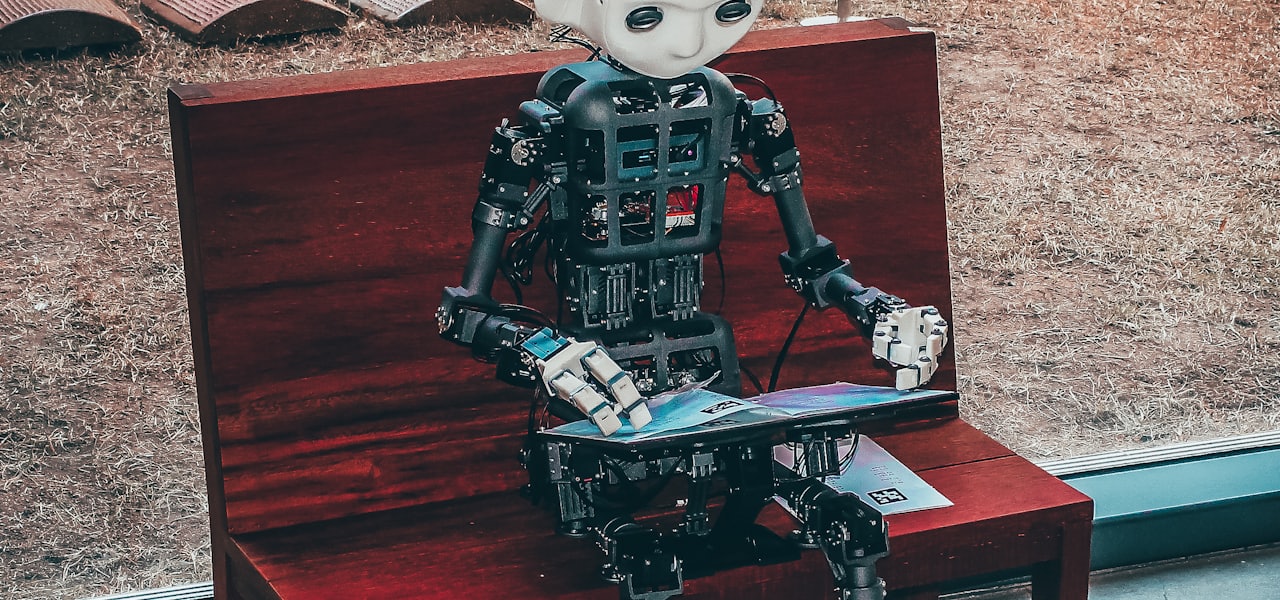
The Site Security Handbook, RFC 2196, is a guide on setting computer security policies and procedures for sites that have systems on the Internet (however, the information provided should also be useful to sites not yet connected to the Internet). The guide lists issues and factors that a site must consider when setting their own policies. It makes a number of recommendations and provides discussions of relevant areas. This guide is only a framework for setting security policies and procedures. In order to have an effective set of policies and procedures, a site will have to make many decisions, gain agreement, and then communicate and implement these policies. The guide is a product of the IETF SSH working group, and was published in 1997, obsoleting the earlier RFC 1244 from 1991.
ChromaDB
Chroma or ChromaDB is open-source data infrastructure tailored to applications with large language models. Its headquarters are in San Francisco. In April 2023, it raised 18 million US dollars as seed funding. ChromaDB has been used in academic studies on artificial intelligence, particularly as part of the tech stack for retrieval-augmented generation.
International Speech Communication Association
The International Speech Communication Association (ISCA) is a non-profit organization and one of the two main professional associations for speech communication science and technology, the other association being the IEEE Signal Processing Society. == Purpose == The purpose of the International Speech Communication Association (ISCA) is to promote the study and application of automatic speech processing, including speech recognition and synthesis, as well as related areas such as speaker recognition and speech compression. The association's activities cover all aspects of speech processing, including computational, linguistic, and theoretical aspects. The primary goal of the International Speech Communication Association (ISCA) is to advance the field of automatic speech processing and communication technology through research, education, and collaboration. By promoting the study and application of speech technologies such as speech recognition, speech synthesis, speaker recognition, and speech compression, ISCA aims to foster innovation and development in the areas of human-computer interaction, telecommunications, and multimedia applications. ISCA serves as a platform for researchers, academics, industry professionals, and students to exchange knowledge, share best practices, and foster interdisciplinary dialogue in the field of speech communication science. Through conferences, workshops, publications, and educational initiatives, ISCA seeks to enhance the understanding of speech processing mechanisms, improve the accuracy and efficiency of speech technologies, and explore new frontiers in the realm of human language communication. Furthermore, ISCA plays a crucial role in promoting international collaboration and networking among professionals in the speech communication community. By facilitating partnerships and cooperation between individuals and organizations worldwide, ISCA seeks to drive global progress in speech technology research and application, ultimately contributing to the advancement of communication systems, accessibility tools, and interactive interfaces that benefit society as a whole. == Conferences == ISCA organizes yearly the Interspeech conference. Most recent Interspeech: 2013 Lyon, France 2014 Singapore 2015 Dresden, Germany 2016 San Francisco, US 2017 Stockholm, Sweden 2018 Hyderabad, India 2019 Graz, Austria 2020 Shanghai, China (fully virtual) 2021 Brno, Czechia (hybrid) 2022 Incheon, South Korea 2023 Dublin, Ireland 2023 Kos Island, Greece Forthcoming Interspeech: 2025 Rotterdam, the Netherlands == ISCA board == The ISCA president for 2023-2025 is Odette Scharenborg. The vice president is Bhuvana Ramabhadran and the other members are professionals in the field. == History of ISCA == The precursor to Interspeech was a conference called Eurospeech, first held in 1989 and organised by Jean-Pierre Tubach. It was the conference of the European Speech Communication Association (ESCA), itself the precursor of the International Speech Communication Association (ISCA). A year later another conference on speech science and technology was started: the International Conference on Spoken Language Processing (ICSLP), which was founded in 1990 by Hiroya Fujisaki. The first ISCA (vs. ESCA) event was the merging of Eurospeech and ICSLP to create ICSLP-Interspeech, held in Beijing, China in 2000. This was followed by Eurospeech-Interspeech, which was held in Aalborg, Denmark in 2001. In 2007, the Eurospeech and ICSLP parts of the conference names were dropped and Interspeech became the name of the yearly conference (first Interspeech location: Antwerp, Belgium).
Captions (app)
Mirage (formerly known as Captions) is a video-generating, video-editing and AI research company headquartered in New York City. Their first app, Captions, is available on iOS, Android, and Web and offers a suite of tools aimed at streamlining the creation and editing of videos. Their enterprise platform, Mirage Studio, generates AI actors and videos for marketing assets and video campaigns. == History == Mirage was co-founded by Gaurav Misra and Dwight Churchill. During Misra's time leading design engineering at Snap Inc., he followed the rise of a new category of video, the "talking video." In 2021, Misra left Snap to found Mirage with his former colleague Churchill. Later that year, the Captions app launched with early backing from venture capital firms Sequoia Capital and Andreessen Horowitz as well as individual investors. In 2023, the company released Lipdub, an Al dubbing app which translates any video with spoken audio into 28 languages. In October 2023, Captions shared that it maintained over 100,000 daily active users with "about a million" videos being created monthly. In November 2024, Captions acquired AlpacaML, a generative AI company that focused on art and other images. In June 2025, Captions launched Mirage Studio, for marketers and advertising agencies. In September 2025, Captions rebranded their company to Mirage. This change reflects the company's focus on developing their proprietary foundation model and future video products. == Products == The Captions app offers features to automate common production tasks including captioning, editing, dubbing, script creation, and music integration. Mirage Studio allows users to generate AI avatars and create short-form videos from prompts or audio. == Awards == In 2023, the company was recognized as part of Fast Company's "Next Big Things In Tech" series. In 2024, the company won 2 Webby Awards for Best Use of AI & Machine Learning and Creative Production.
Automated dispensing cabinet
An automated dispensing cabinet (ADC), also called a unit-based cabinet (UBC), automated dispensing device (ADD), or automated dispensing machine (ADM)[1], is a computerized medicine cabinet for hospitals and healthcare settings. ADCs allow medications to be stored and dispensed near the point of care while controlling and tracking drug distribution. == Overview == Hospital pharmacies have provided medications for patients by filling patient-specific cassettes of unit-dose medications that were then delivered to the nursing unit and stored in medication cabinets or carts. ADCs, originally designed for hospital use, were introduced in hospitals in the 1980s and have facilitated the transition to alternative delivery models and more decentralized medication distribution systems.[2] Implementing automated dispensing cabinets as part of a decentralized or hybrid medication distribution system can improve patient safety and the accountability of the inventory, streamline certain billing processes. However, in the 2000s, the technology began to be deployed into other care settings where medication doses were stored onsite, and higher security methods were needed to control inventory, access, and dispensing of each patient dose. Settings that now deploy ADCs include long-term care facilities, hospice, critical access hospitals, surgery centers, group homes, residential care facilities, rehab and psych environments, animal health, dental clinics, and nursing education simulation. These diverse care settings share a common need to safely store, account for, and dispense individual doses of medications, especially narcotics and high-value medications, at the point of care.[3] ADCs track user access and dispensed medications, and their use can improve control over medication inventory. The real-time inventory reports generated by many cabinets can simplify the filling process and help the pharmacy track expired drugs. Furthermore, by restricting individual drugs – such as high-risk medications and controlled substances – to unique drawers within the cabinet, overall inventory management, patient safety, and medication security can be improved. Automated dispensing cabinets allow the pharmacy department to profile physician orders before they are dispensed.[4] ADCs can also enable providers to record medication charges upon dispensing, reducing the billing paperwork the pharmacy is responsible for. In addition, nurses can note returned medications using the cabinets' computers, enabling direct credits to patients' accounts. Since automated cabinets can be located on the nursing unit floor, nursing have speedier access to a patient's medications. Also, shorter waiting time ensures improved patient comfort and care.[5] == Role of automated dispensing in healthcare == Automated dispensing is a pharmacy practice in which a device dispenses medications and fills prescriptions. ADCs, which can handle many different medications, are available from a number of manufacturers such as BD, ARxIUM, and Omnicell. Though members of the pharmacy community have been utilizing automation technology since the 1980s, companies are constantly improving ADCs to meet changing needs and health standards in the industry. Several goals can be met by implementing an automated product in a healthcare facility. Patient safety can be ensured with the use of ADC technology such as barcoding. Anesthesia ADCs in operating rooms and perioperative areas may include label printing to prevent mix-ups such as errors between morphine and hydromorphone, two different opioid analgesics that frequently get confused. These systems also communicate with the pharmacy and its information management system to track medications removed and support inventory replenishment. == Key features == ADCs are like automated teller machines whose specific technologies such as barcode scanning and clinical decision support can improve medication safety. Some have metal locking drawers for added security and some have automated single-dose dispensing to prevent the need for a blind count each time a controlled substance is accessed. Over the years, ADCs have been adapted to facilitate compliance with emerging regulatory requirements such as pharmacy review of medication orders and safe practice recommendations. ADCs incorporate advanced software and electronic interfaces to synthesize high-risk steps in the medication use process. These unit-based medication repositories provide computer-controlled storage, dispensation, tracking, and documentation of medication distribution in the resident care unit. Since automated dispensing cabinets are not located in the pharmacy, they are considered "decentralized" medication distribution systems. Instead, they can be found at the point of care on the resident care unit. Tracking of the stocking and distribution process can occur by interfacing the unit with a central pharmacy computer. These cabinets can also be interfaced with other external databases such as resident profiles, the facility's admission/discharge/transfer system, and billing systems. Most ADC providers offer scalable systems since several important factors vary widely by facility such as budget, physical room size, patient population/demographics, type of healthcare facility, etc.
Eugene Goostman
Eugene Goostman is a chatbot that some regard as having passed the Turing test, a test of a computer's ability to communicate indistinguishably from a human. Developed in Saint Petersburg in 2001 by a group of three programmers, the Russian-born Vladimir Veselov, Ukrainian-born Eugene Demchenko, and Russian-born Sergey Ulasen, Goostman is portrayed as a 13-year-old Ukrainian boy—characteristics that are intended to induce forgiveness in those with whom it interacts for its grammatical errors and lack of general knowledge. The Goostman bot has competed in a number of Turing test contests since its creation, and finished second in the 2005 and 2008 Loebner Prize contest. In June 2012, at an event marking what would have been the 100th birthday of the test's author, Alan Turing, Goostman won a competition promoted as the largest-ever Turing test contest, in which it successfully convinced 29% of its judges that it was human. On 7 June 2014, at a contest marking the 60th anniversary of Turing's death, 33% of the event's judges thought that Goostman was human; the event's organiser Kevin Warwick considered it to have passed Turing's test as a result, per Turing's prediction in his 1950 paper "Computing Machinery and Intelligence", that by the year 2000, machines would be capable of fooling 30% of human judges after five minutes of questioning. The validity and relevance of the announcement of Goostman's pass was questioned by critics, who noted the exaggeration of the achievement by Warwick, the bot's use of personality quirks and humour in an attempt to misdirect users from its non-human tendencies and lack of real intelligence, along with "passes" achieved by other chatbots at similar events. == Personality == Eugene Goostman is portrayed as being a 13-year-old boy from Odesa, Ukraine, who has a pet guinea pig and a father who is a gynaecologist. Veselov stated that Goostman was designed to be a "character with a believable personality". The choice of age was intentional, as, in Veselov's opinion, a thirteen-year-old is "not too old to know everything and not too young to know nothing". Goostman's young age also induces people who "converse" with him to forgive minor grammatical errors in his responses. In 2014, work was made on improving the bot's "dialog controller", allowing Goostman to output more human-like dialogue. A conversation between Scott Aaronson and Eugene Goostman ran as follows: == Competitions == Eugene Goostman has competed in a number of Turing test competitions, including the Loebner Prize contest; it finished joint second in the Loebner test in 2001, and came second to Jabberwacky in 2005 and to Elbot in 2008. On 23 June 2012, Goostman won a Turing test competition at Bletchley Park in Milton Keynes, held to mark the centenary of its namesake, Alan Turing. The competition, which featured five bots, twenty-five hidden humans, and thirty judges, was considered to be the largest-ever Turing test contest by its organizers. After a series of five-minute-long text conversations, 29% of the judges were convinced that the bot was an actual human. === 2014 "pass" === On 7 June 2014, in a Turing test competition at the Royal Society, organised by Kevin Warwick of the University of Reading to mark the 60th anniversary of Turing's death, Goostman won after 33% of the judges were convinced that the bot was human. 30 judges took part in the event, which included Lord Sharkey, a sponsor of Turing's posthumous pardon, artificial intelligence Professor Aaron Sloman, Fellow of the Royal Society Mark Pagel and Red Dwarf actor Robert Llewellyn. Each judge partook in a textual conversation with each of the five bots; at the same time, they also conversed with a human. In all, a total of 300 conversations were conducted. In Warwick's view, this made Goostman the first machine to pass a Turing test. In a press release, he added that: Some will claim that the Test has already been passed. The words Turing Test have been applied to similar competitions around the world. However this event involved more simultaneous comparison tests than ever before, was independently verified and, crucially, the conversations were unrestricted. A true Turing Test does not set the questions or topics prior to the conversations. In his 1950 paper "Computing Machinery and Intelligence", Turing predicted that by the year 2000, computer programs would be sufficiently advanced that the average interrogator would, after five minutes of questioning, "not have more than 70 per cent chance" of correctly guessing whether they were speaking to a human or a machine. Although Turing phrased this as a prediction rather than a "threshold for intelligence", commentators believe that Warwick had chosen to interpret it as meaning that if 30% of interrogators were fooled, the software had "passed the Turing test". ==== Reactions ==== Warwick's claim that Eugene Goostman was the first ever chatbot to pass a Turing test was met with scepticism; critics acknowledged similar "passes" made in the past by other chatbots under the 30% criteria, including PC Therapist in 1991 (which tricked 5 of 10 judges, 50%), and at the Techniche festival in 2011, where a modified version of Cleverbot tricked 59.3% of 1334 votes (which included the 30 judges, along with an audience). Cleverbot's developer, Rollo Carpenter, argued that Turing tests can only prove that a machine can "imitate" intelligence rather than show actual intelligence. Gary Marcus was critical of Warwick's claims, arguing that Goostman's "success" was only the result of a "cleverly-coded piece of software", going on to say that "it's easy to see how an untrained judge might mistake wit for reality, but once you have an understanding of how this sort of system works, the constant misdirection and deflection becomes obvious, even irritating. The illusion, in other words, is fleeting." While acknowledging IBM's Deep Blue and Watson projects—single-purpose computer systems meant for playing chess and the quiz show Jeopardy! respectively—as examples of computer systems that show a degree of intelligence in their specialised field, he further argued that they were not an equivalent to a computer system that shows "broad" intelligence, and could—for example, watch a television programme and answer questions on its content. Marcus stated that "no existing combination of hardware and software can learn completely new things at will the way a clever child can." However, he still believed that there were potential uses for technology such as that of Goostman, specifically suggesting the creation of "believable", interactive video game characters. Imperial College London professor Murray Shanahan questioned the validity and scientific basis of the test, stating that it was "completely misplaced, and it devalues real AI research. It makes it seem like science fiction AI is nearly here, when in fact it's not and it's incredibly difficult." Mike Masnick, editor of the blog Techdirt, was also skeptical, questioning publicity blunders such as the five chatbots being referred to in press releases as "supercomputers", and saying that "creating a chatbot that can fool humans is not really the same thing as creating artificial intelligence."
Normalization (image processing)
In image processing, normalization is a process that changes the range of pixel intensity values, a kind of intensity mapping. Applications include photographs with poor contrast due to glare, for example. A typical case is contrast stretching. In more general fields of data processing, such as digital signal processing, it is referred to as dynamic range expansion. The purpose of dynamic range expansion in the various applications is usually to bring the image, or other type of signal, into a range that is more familiar or normal to the senses, hence the term normalization. Often, the motivation is to achieve consistency in dynamic range for a set of data, signals, or images to avoid mental distraction or fatigue. For example, a newspaper will strive to make all of the images in an issue share a similar range of grayscale. Auto-normalization in image processing software typically normalizes to the full dynamic range of the number system specified in the image file format. == Definition == Normalization transforms an n-dimensional grayscale image I : { X ⊆ R n } → { Min , . . , Max } {\displaystyle I:\{\mathbb {X} \subseteq \mathbb {R} ^{n}\}\rightarrow \{{\text{Min}},..,{\text{Max}}\}} with intensity values in the range ( Min , Max ) {\displaystyle ({\text{Min}},{\text{Max}})} , into a new image I N : { X ⊆ R n } → { newMin , . . , newMax } {\displaystyle I_{N}:\{\mathbb {X} \subseteq \mathbb {R} ^{n}\}\rightarrow \{{\text{newMin}},..,{\text{newMax}}\}} with intensity values in the range ( newMin , newMax ) {\displaystyle ({\text{newMin}},{\text{newMax}})} . The linear normalization of a grayscale digital image is performed according to the formula I N = ( I − Min ) newMax − newMin Max − Min + newMin {\displaystyle I_{N}=(I-{\text{Min}}){\frac {{\text{newMax}}-{\text{newMin}}}{{\text{Max}}-{\text{Min}}}}+{\text{newMin}}} For example, if the intensity range of the image is 50 to 180 and the desired range is 0 to 255 the process entails subtracting 50 from each of pixel intensity, making the range 0 to 130. Then each pixel intensity is multiplied by 255/130, making the range 0 to 255. Normalization might also be non-linear, as the relationship between I {\displaystyle I} and I N {\displaystyle I_{N}} may not be linear. An example of non-linear normalization is when the normalization follows a sigmoid function, in which case the normalized image is computed according to the formula I N = ( newMax − newMin ) 1 1 + e − I − β α + newMin {\displaystyle I_{N}=({\text{newMax}}-{\text{newMin}}){\frac {1}{1+e^{-{\frac {I-\beta }{\alpha }}}}}+{\text{newMin}}} Where α {\displaystyle \alpha } defines the width of the input intensity range, and β {\displaystyle \beta } defines the intensity around which the range is centered. Gamma correction (log/inverse log) is also a common transformation function. === Colorspace === Intensity operations generally operate on a colorspace that maps to the human perception of lightness without intentionally changing the other properties. This can be done, for example, by operating on the L component of the CIELAB color space, or approximately by operating on the Y component of YCbCr. It is also possible to operate on each of the RGB color channels, though the result will not always make sense. == Contrast stretching == This is the most significant and essential technique of spatial-based image enhancement. The basic intent of this contrast enhancement technique is to adjust the local contrast in the image so as to bring out the clear regions or objects in the image. Low-contrast images often result from poor or non-uniform lighting conditions, a limited dynamic range of the imaging sensor, or improper settings of the lens aperture. This operation tries to change the intensity of the pixel in the image, particularly in the input image, to obtain an enhanced image. It is based on the number of techniques, namely local, global, dark and bright levels of contrast. The contrast enhancement is considered as the amount of color or gray differentiation that lies among the different features in an image. The contrast enhancement improves the quality of image by increasing the luminance difference between the foreground and background. A contrast stretching transformation can be achieved by: Stretching the dark range of input values into a wider range of output values: This involves increasing the brightness of the darker areas in the image to enhance details and improve visibility. Shifting the mid-range of input values: This involves adjusting the brightness levels of the mid-tones in the image to improve overall contrast and clarity. Compressing the bright range of input values: This process involves reducing the brightness of the brighter areas in the image to prevent overexposure resulting in a more balanced and visually appealing image. It can be described as the following piecewise funciton: I N = { s 1 r 1 I if I < r 1 s 2 − s 1 r 1 − r 2 ( I − r 1 ) if r 1 ≤ I ≤ r 2 1 − s 2 1 − r 2 ( I − r 2 ) if I > r 2 {\displaystyle I_{N}={\begin{cases}{\frac {s_{1}}{r_{1}}}I&{\text{if }}I